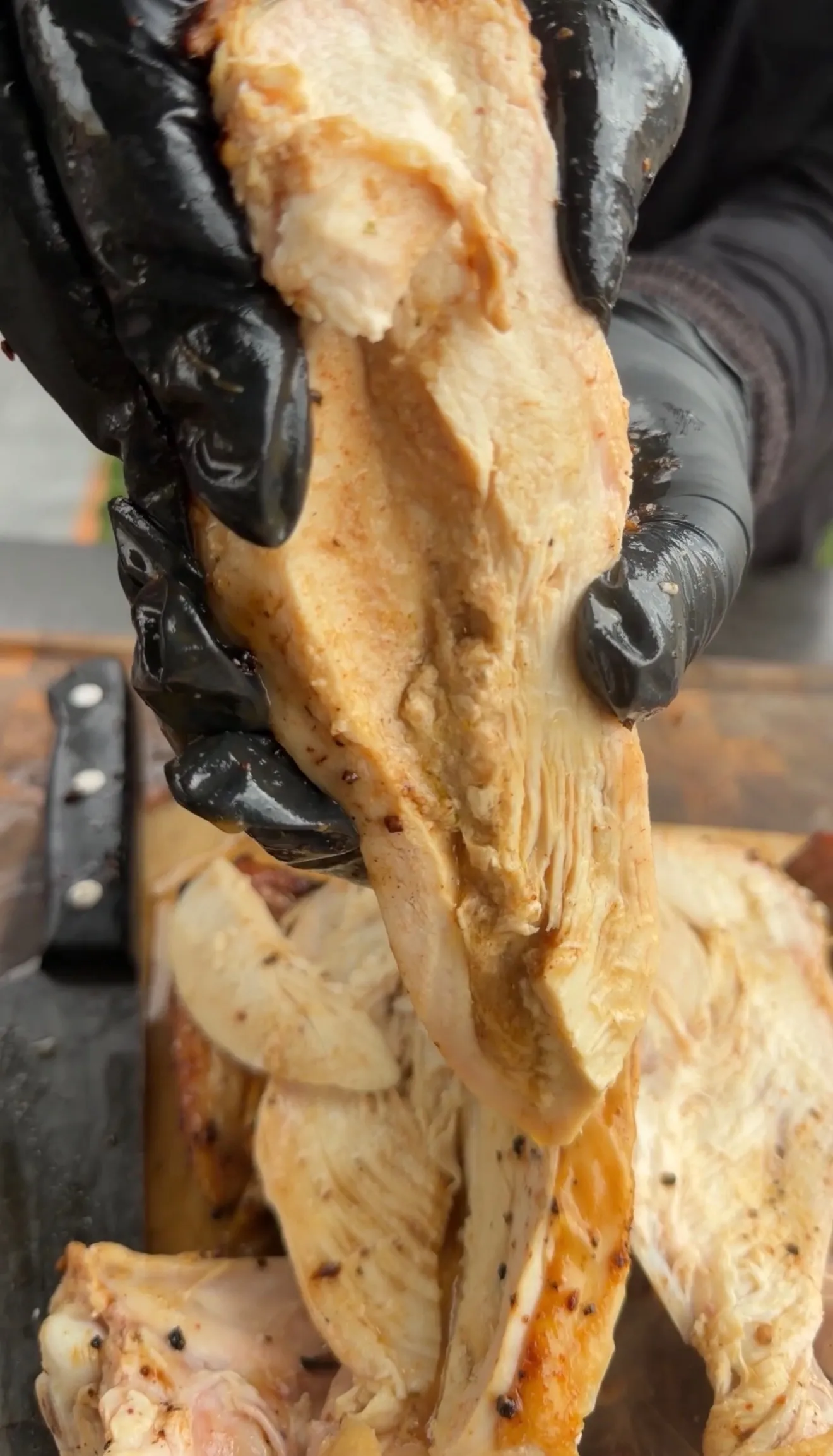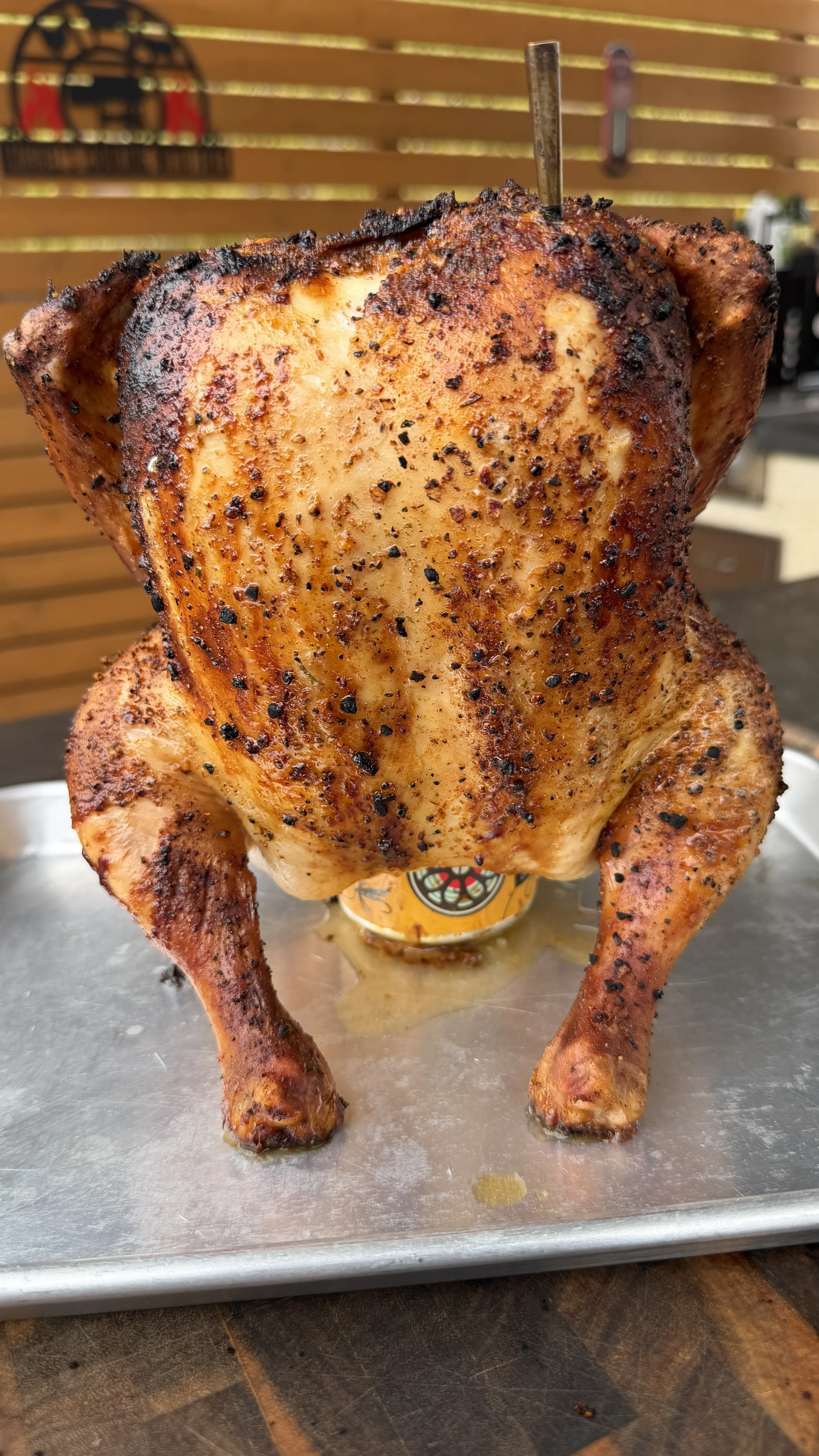
A Surface Rub Cannot Reach the Center of a 4-Pound Bird
A standard rub seasons only the skin and the first few millimeters of meat below it. The center of the breast and the inside of the thigh stay completely bland because dry seasoning cannot travel through dense muscle fibers. Injection solves this by depositing seasoned liquid directly into the muscle from the inside, so every bite carries the same flavor instead of just the outer crust.
The Beer Left in the Can Creates Steam During the Cook
The remaining 8 ounces of beer in the can boils gently as the chicken cooks, releasing steam that rises through the cavity and bastes the inside of the bird from below. Consequently, the breast meat stays moist while the outside develops crispy skin. The steam also carries beer aromatics and any drippings that fall into the can, which adds another layer of flavor from the inside out.
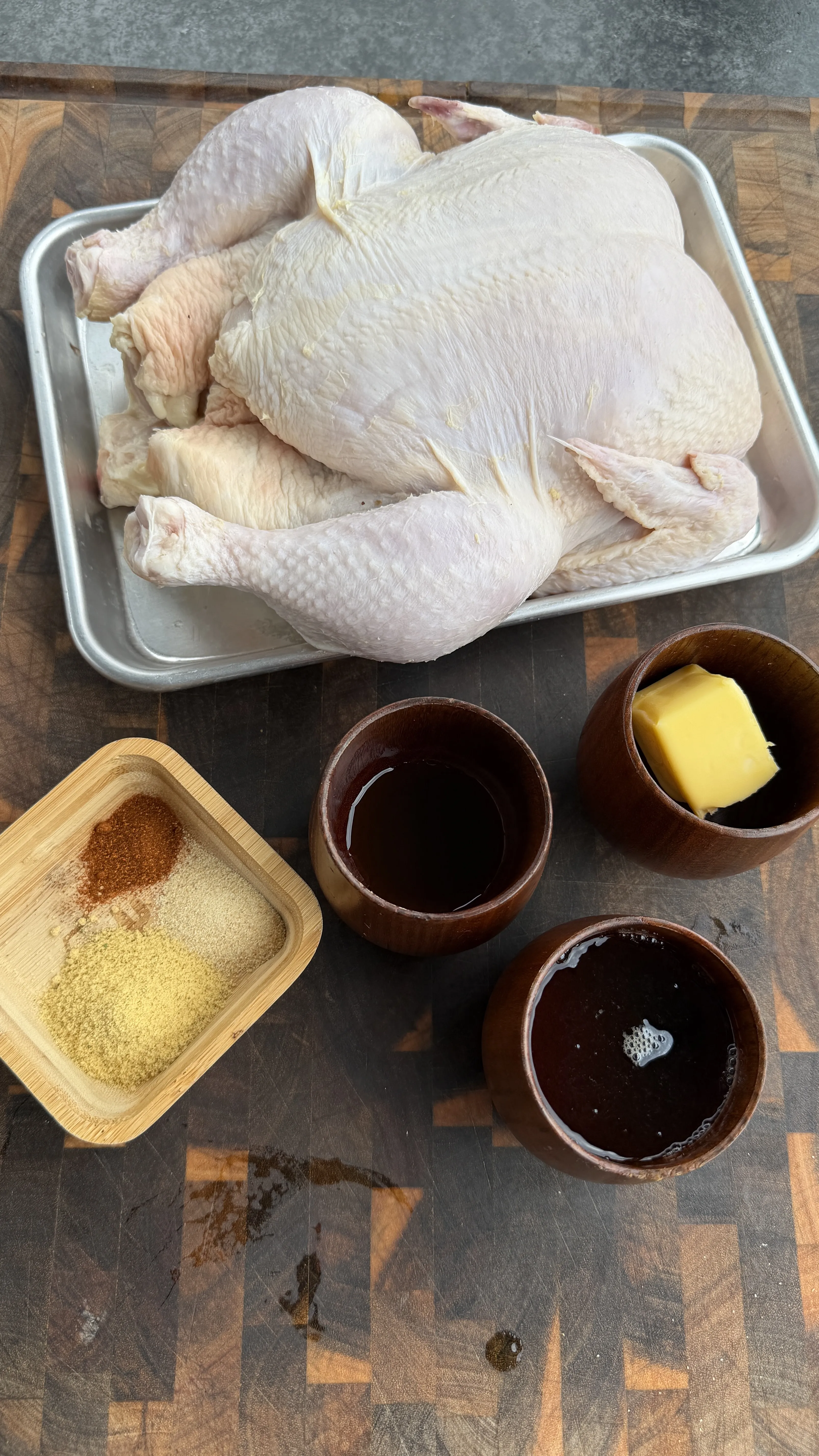
Building the Beer-Butter Injection
Heat the Beer, Butter, and Spices Together
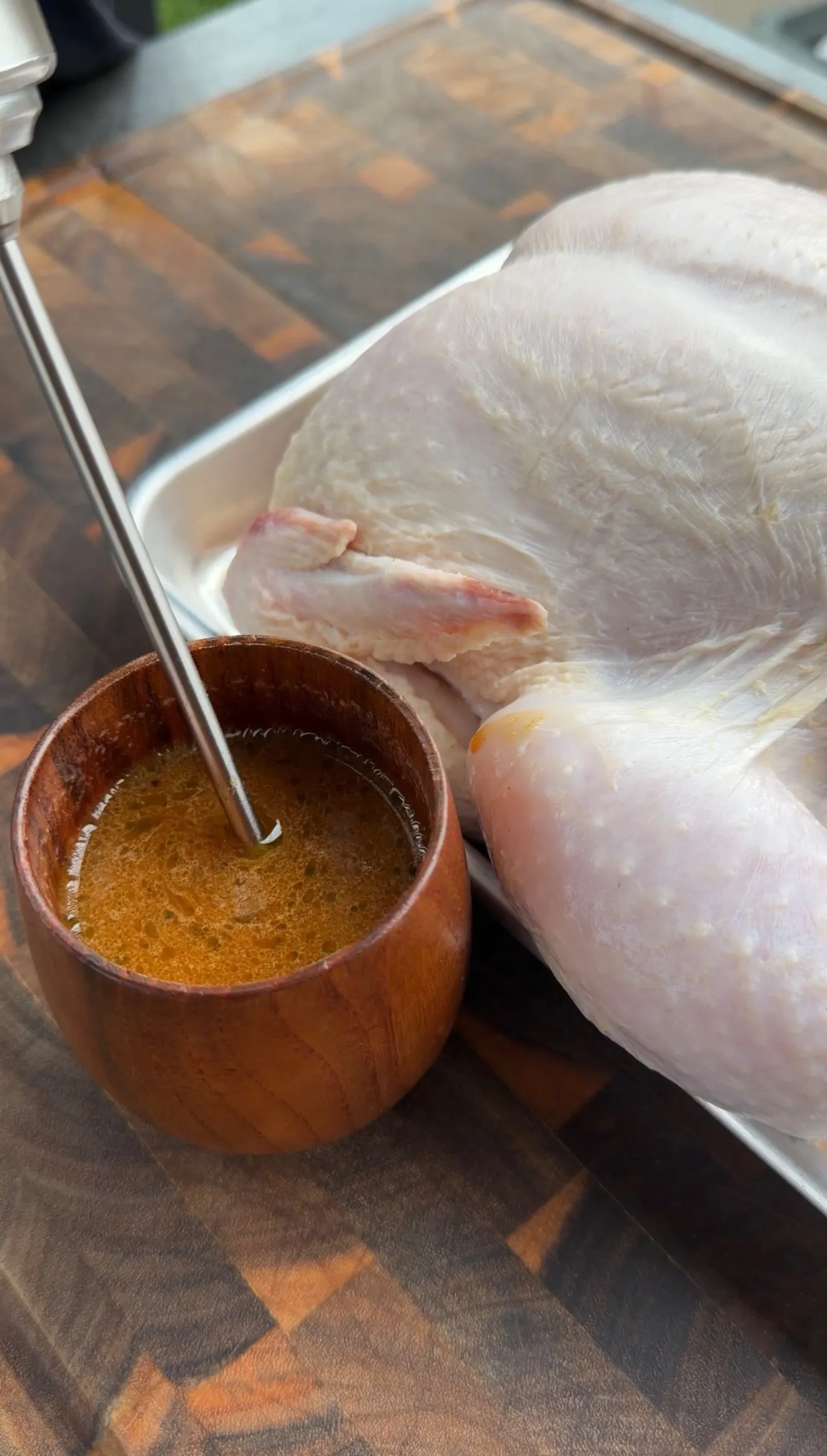
Combine 8 ounces of the beer, 2 tablespoons of butter, 1 tablespoon of Worcestershire sauce, 1 teaspoon of garlic powder, and 1 teaspoon of chipotle powder in a small saucepan over low heat. Warm the mixture until the butter fully melts and the spices incorporate into a single liquid. Stir occasionally so the powders distribute evenly instead of settling at the bottom of the pan.
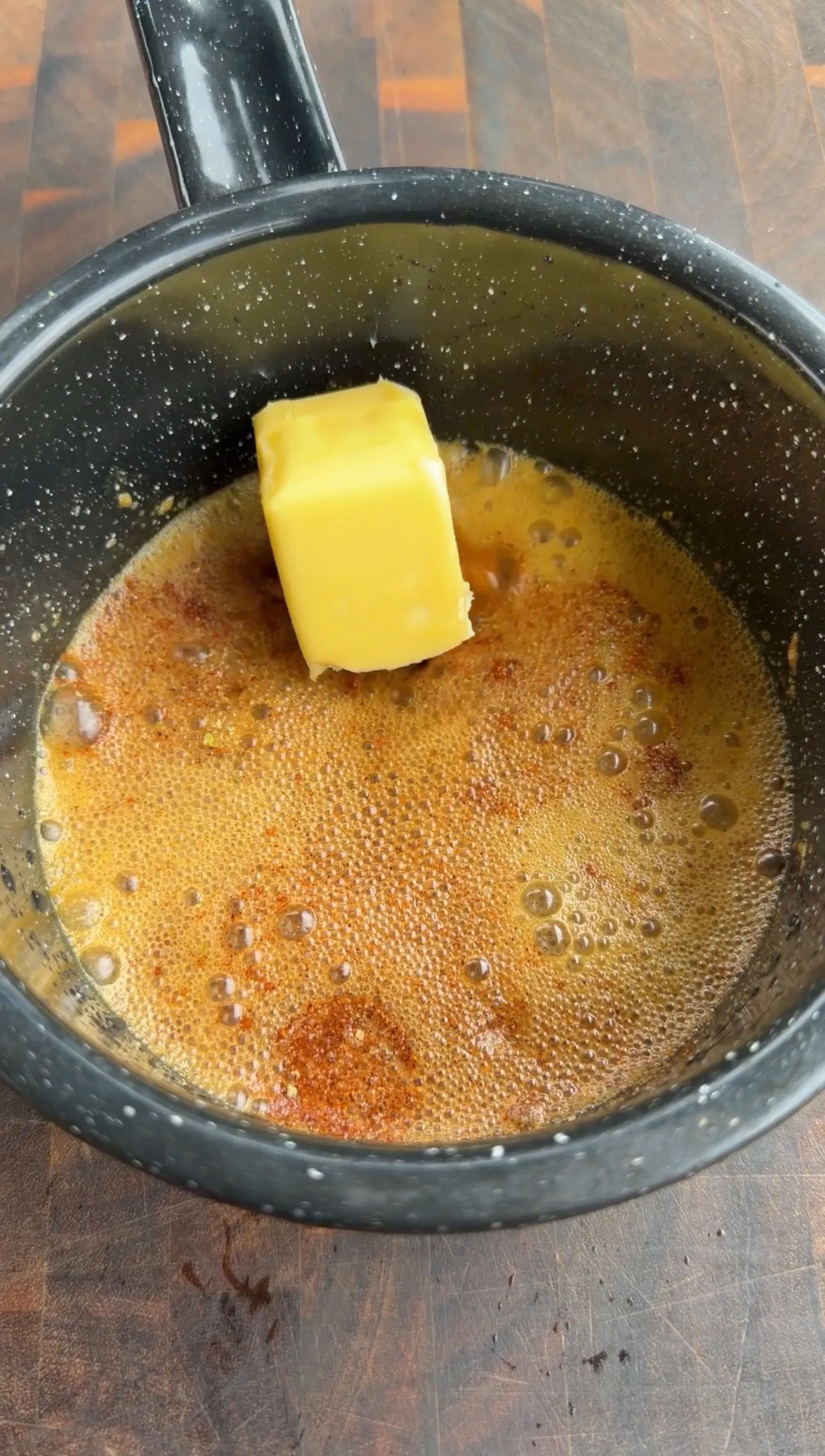
Cool the Injection Before Loading the Syringe
Remove the saucepan from the heat once the butter melts and let the injection cool to warm before loading it into the meat injector. Hot liquid will partially cook the breast meat from the inside and warp the muscle fibers around the injection site. Additionally, an injection that is too cold lets the butter resolidify on contact with cold meat, which clogs the needle and produces uneven distribution.
Injecting and Seasoning the Bird
Inject Cold Meat from Two or Three Angles per Muscle
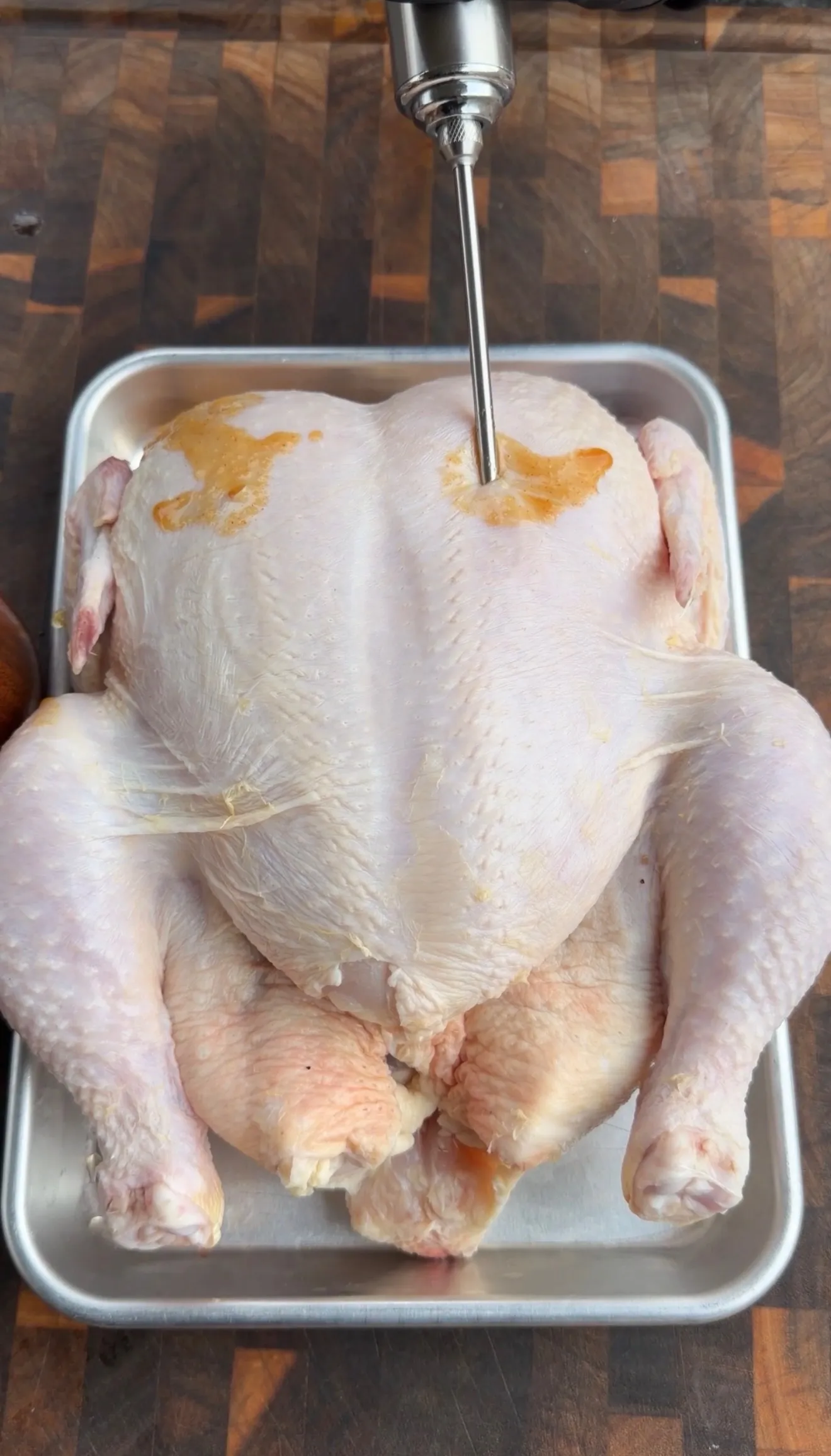
Pull the chicken straight from the refrigerator to inject. Cold flesh holds the marinade in place, while meat at room temperature lets the injection leak right back out through the entry holes. Insert the needle into the thickest part of each breast, thigh, and drumstick. Then fan the liquid through the muscle by angling the needle in two or three directions before pulling it out.
Pat the Skin Dry Before the Rub Goes On
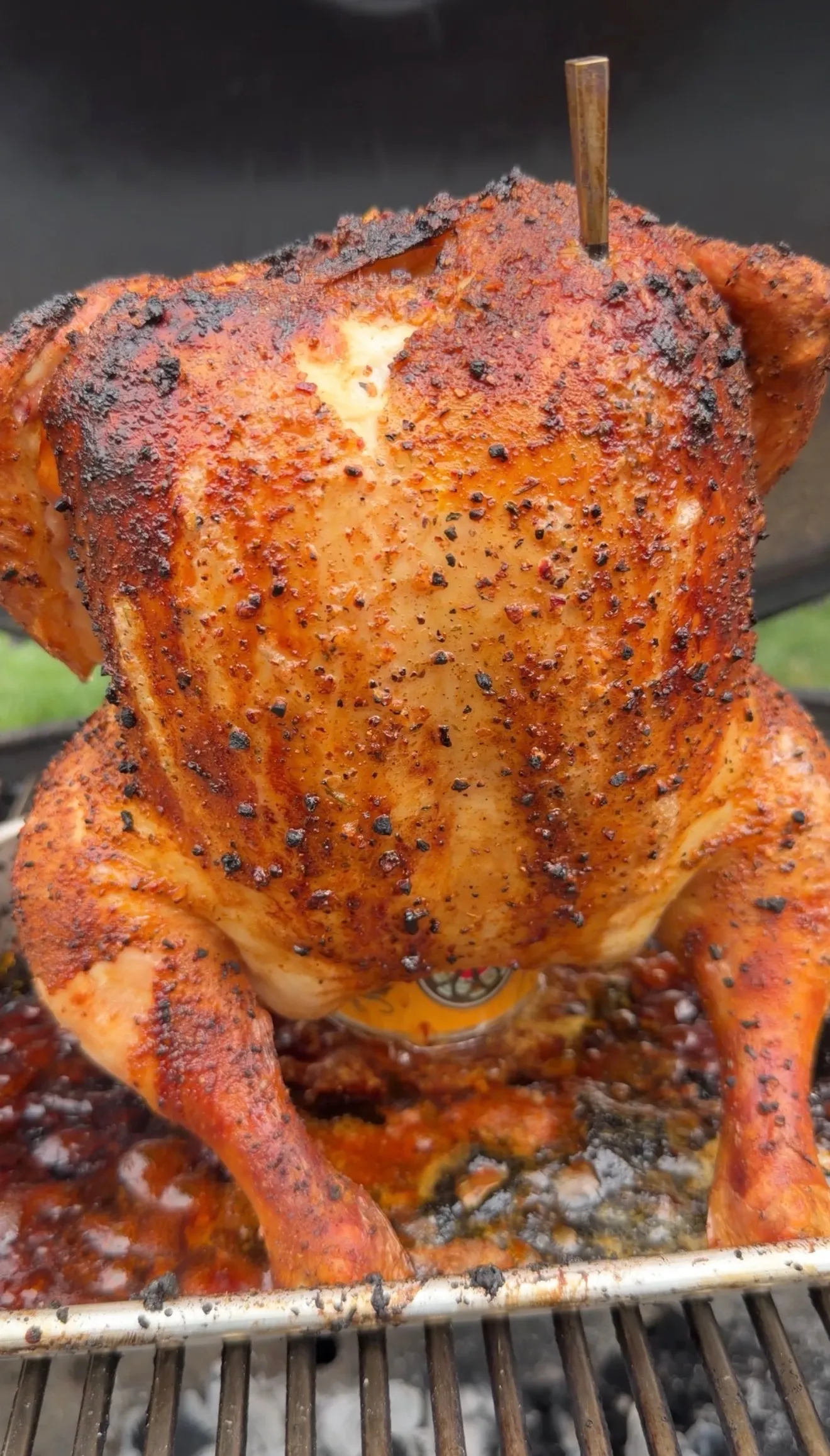
Use paper towels to dry the outside of the chicken after injecting. Moisture on the surface prevents the rub from sticking and slows the skin’s ability to crisp up on the grill. Furthermore, dry skin renders fat more efficiently during the cook, which is what produces the deep mahogany color and crackling texture on the finished bird.
Coat Every Surface Including the Back
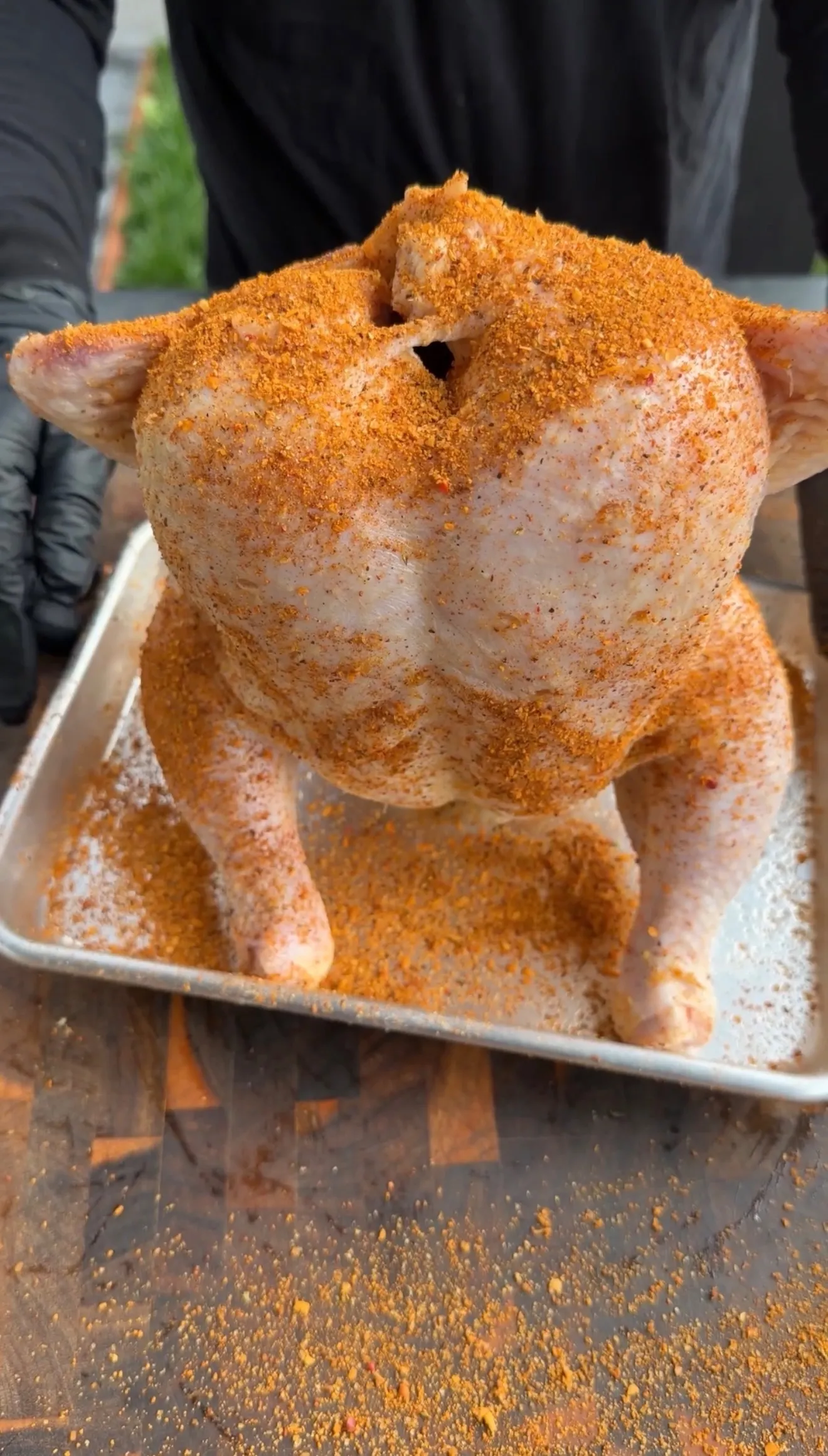
Season the entire chicken generously with your favorite poultry seasoning. Cover the breasts, thighs, drumsticks, wings, and back. Press the rub gently into the skin so it adheres throughout the cook instead of falling off when the bird hits the grates.
Setting Up the Beer Can Stand
Keep 8 Ounces of Beer Inside the Can
Pour half of the 16 ounce beer into the saucepan for the injection and leave the other 8 ounces in the can for the cook itself. The remaining liquid generates the steam that bastes the inside of the chicken throughout the grill. Moreover, open the top of the can fully so the steam can escape upward into the cavity instead of building pressure inside the can.
Form a Tripod with the Drumsticks and Can
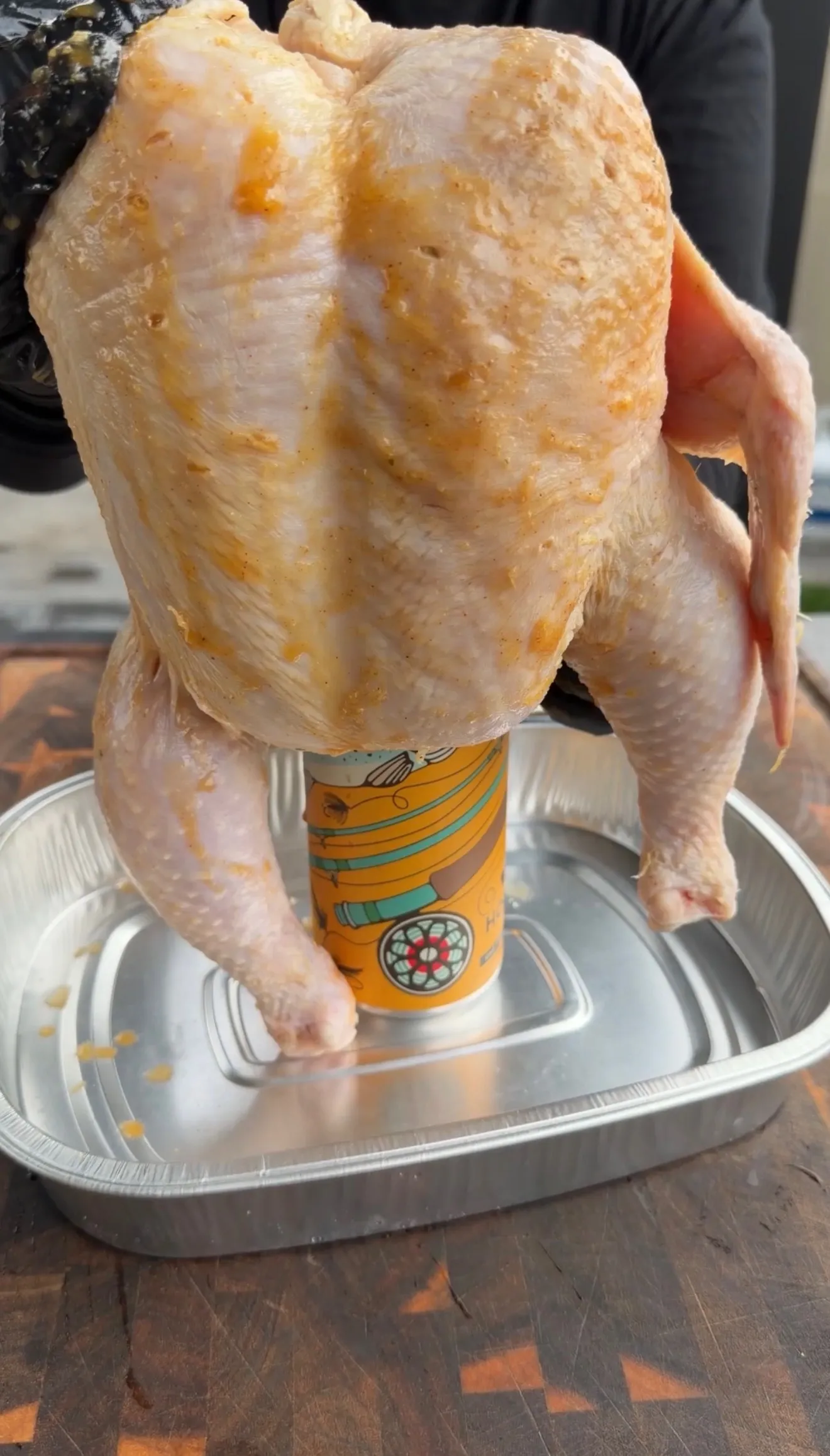
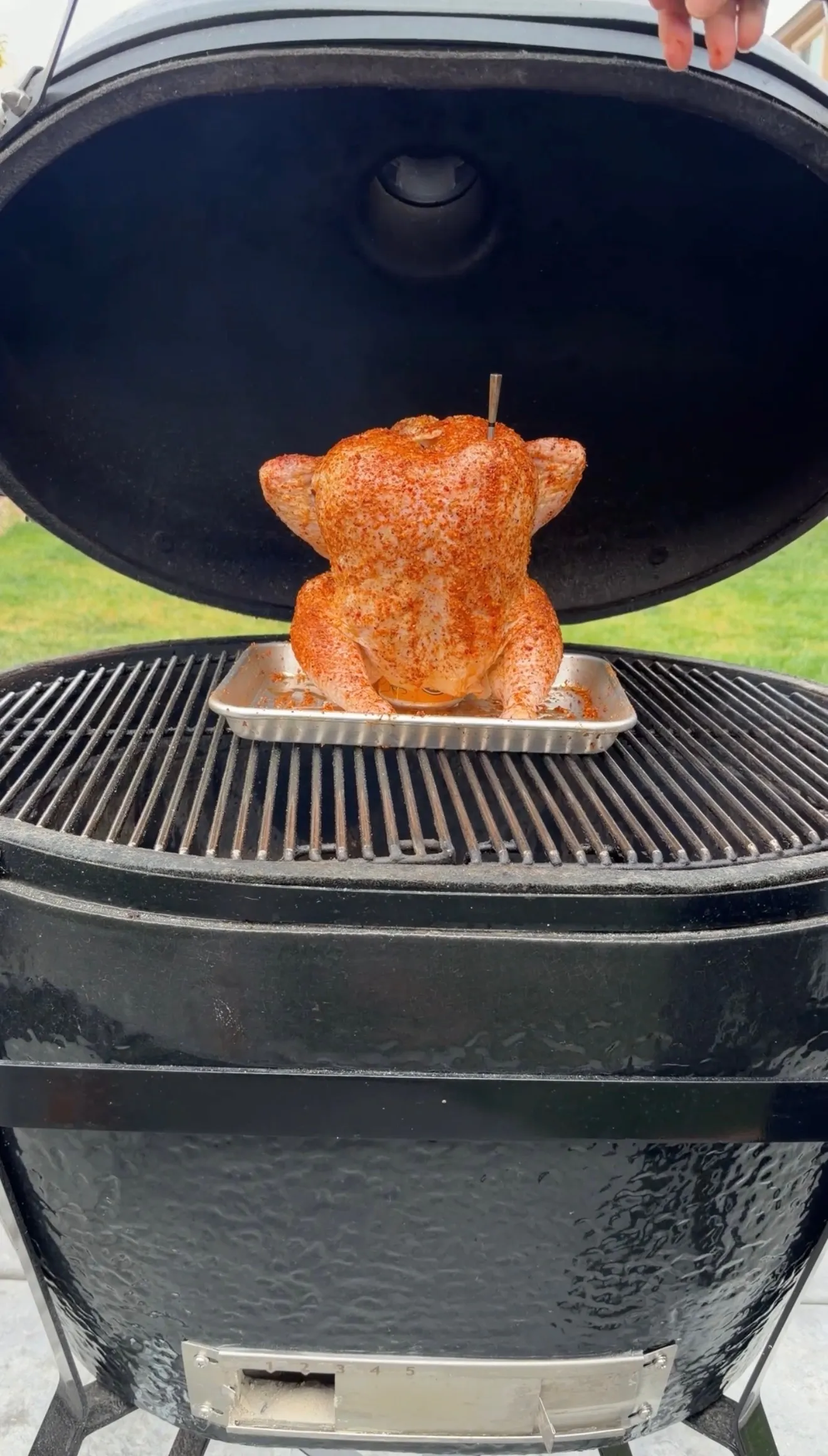
Stand the half-full can upright on a sheet tray or aluminum drip pan. Slide the cavity of the chicken down over the can until the bird sits stable. The two drumsticks should form a tripod with the can, giving three points of contact on the cooking surface. If the chicken wobbles, drop the whole setup into a foil pan for extra support and easier transfer once the cook finishes.
Cooking at 350°F Indirect
Run a Two-Zone Setup to Protect the Bottom
Preheat the smoker or grill to 350°F using indirect heat. On a charcoal or gas grill, set up a two-zone configuration with the burners or coals on one side and an empty zone on the other. The chicken goes over the empty zone. Direct flame under the bird burns the bottom and the underside of the drumsticks long before the breast finishes, which produces black skin and undercooked meat at the same time.
Pull at 165°F in the Breast and 170 to 175°F in the Thigh
Cook until the thickest part of the breast reaches 165°F internal, which usually takes 1.5 to 2 hours on a 4 to 5 pound bird. Probe the thigh joint at the same time. Therefore, both readings matter because the breast finishes earlier than the thigh, and pulling on breast temperature alone can leave dark meat slightly tough and underrendered.
Resting and Carving
10 Minutes Off the Heat Before Slicing
Carefully transfer the chicken to a sheet tray and rest it at least 10 minutes before carving. The rest allows the injected juices to redistribute through the muscle, so they stay in the meat instead of running onto the cutting board. As a result, every slice carries the same moisture and flavor as the center of the bird instead of drying out at the edges.